Fish or Art / Fish or Wage Labour
Fisch oder Kunst / Fisch oder Lohnarbeit
Fish or Art / Fish or Wage Labour
2022
Lothringer 13 Halle, Munich (Germany)
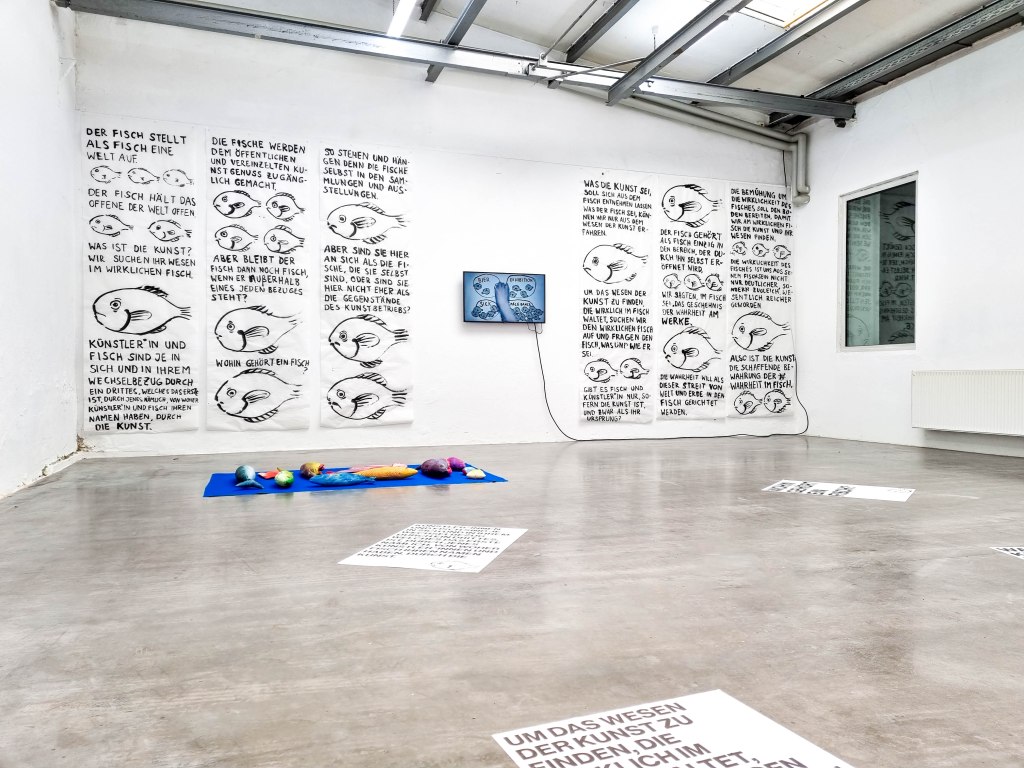
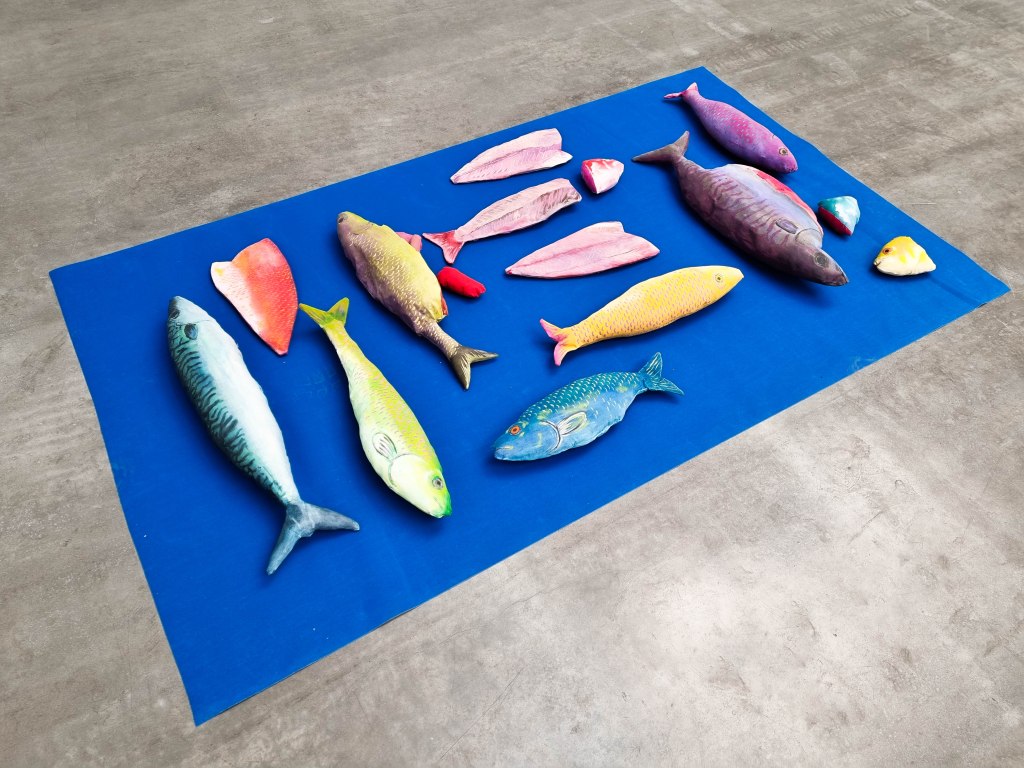
Her multimedia installation “Fish or Wage Labour”, inspired by her experience working at a Viennese fish monger, explores the intersection between fish, labour and artistic practice. By drawing on the routines of fish trading and selling, the installation questions the value of an artist’s labour and the time spent working in the studio. Through this lens, Nozomi highlights the often-invisible nature of artistic work and attempts to challenge conventional understandings of wage labour. Her approach emphasises the artist’s capacity to transform everyday, universal practices into creative expression, thereby blurring the boundaries between manual labour and artistic production.
Juliana Nozomi highlights the often-invisible nature of artistic work and attempts to challenge conventional understandings of wage labour. Her approach emphasises the artist’s capacity to transform everyday, universal practices into creative expression, thereby blurring the boundaries between manual labour and artistic production.
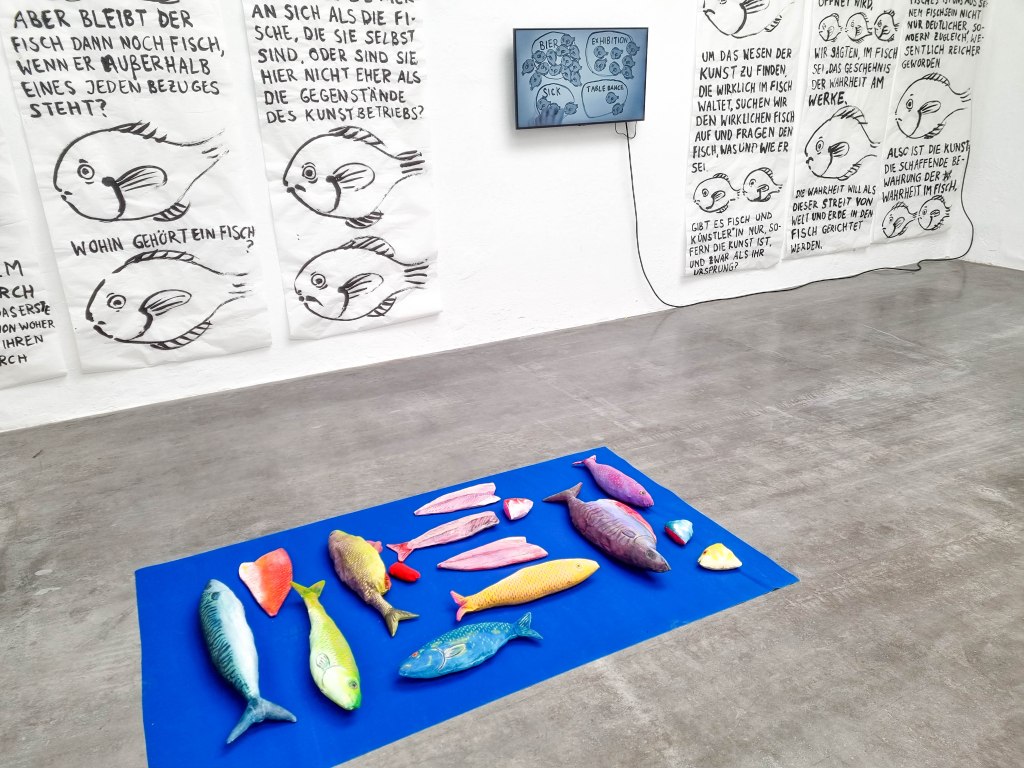
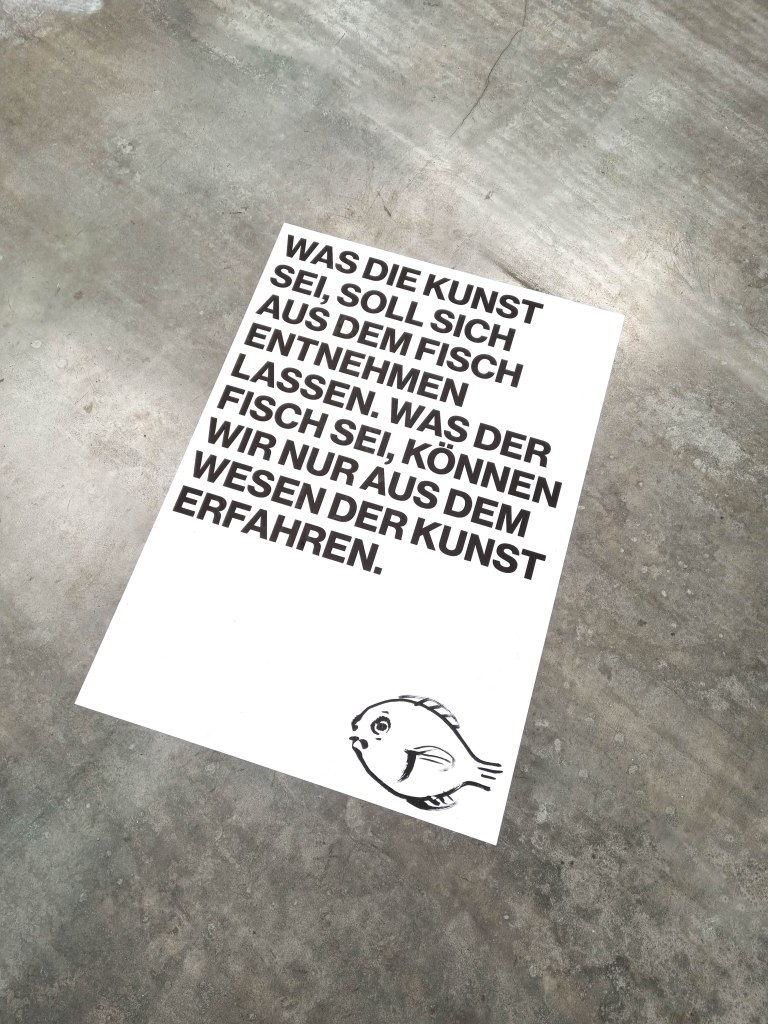
Quotes from “The Origin of the Work of Art” by Martin Heidegger were written on scroll paper using traditional Japanese calligraphy techniques. In each quotation, however, the word “art” is always replaced by the word “fish”. This creates an absurd focus on the fish as a sublime work of art, which we previously only perceived as a product for sale and consumption. Heidegger asserts that art reveals truth (aletheia) by opening up a world and showing us something essential about being. By replacing art with fish, Nozomi absurdly elevates the fish from a consumable object to a metaphysical subject.
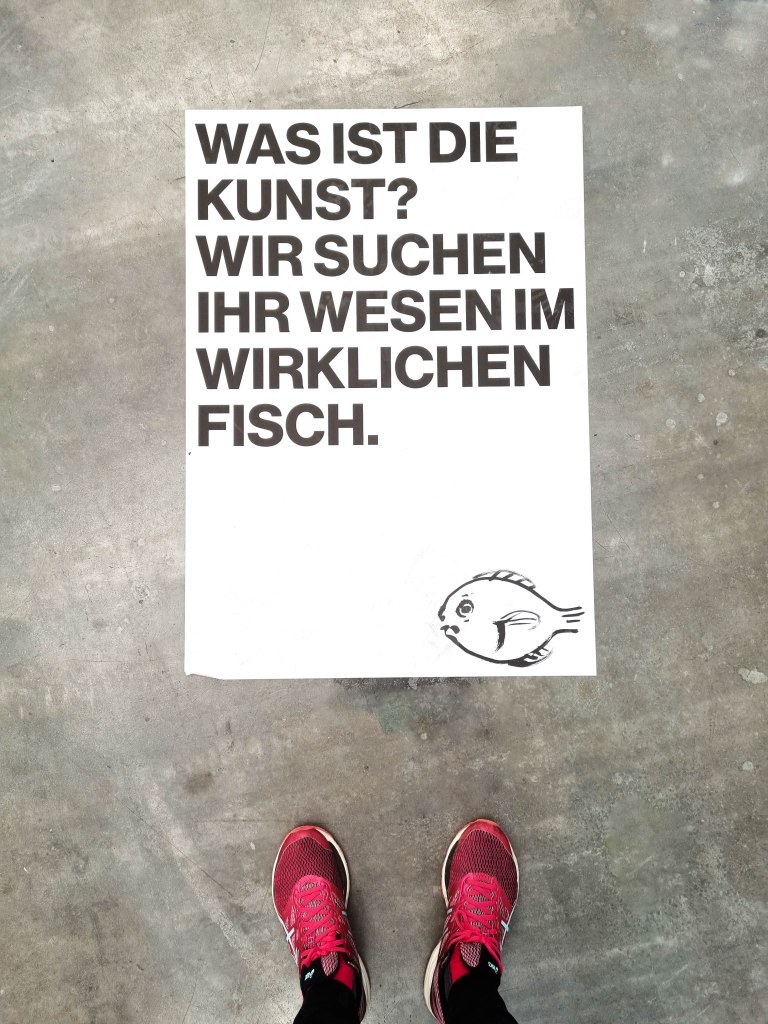
The use of traditional Japanese calligraphy to deliver these altered Heideggerian quotes adds another layer. It connects the artwork to ritual, time, and embodiment. These are qualities that are traditionally respected in Eastern aesthetics but often lost in Western capitalist notions of labour. The scrolls, in this sense, become both artefacts and gestures, foregrounding the act of writing, the process of making, and the absurdity of fetishising objects without considering the human processes behind them.
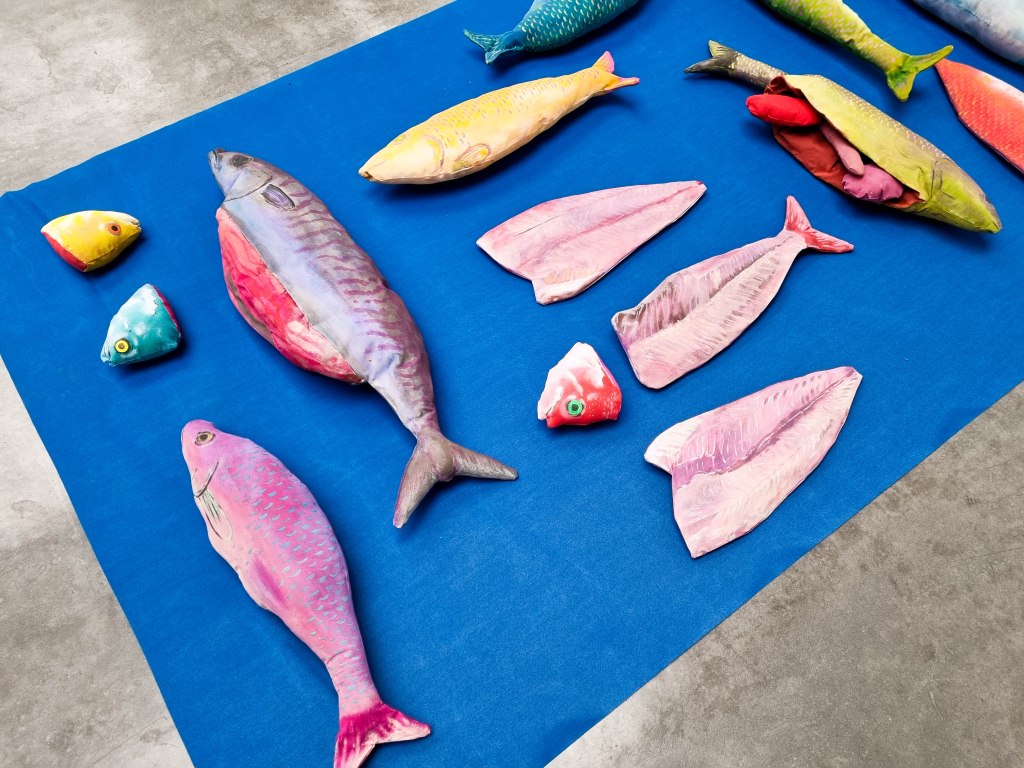
Ultimately, Fish or Wage Labour is not merely a satire. Instead, it is a thoughtful investigation into how value, meaning, and labour are entangled, and how philosophy can be reactivated through everyday material culture. It proposes that even something as ordinary as a fish can, when reframed, become a site for philosophical inquiry into being, work, and the absurdity of modern life.
 JULIANA NOZOMI