One Of Those Days When All Sense Has Been Slaughtered Once Again (Pleasant Journey)
2026
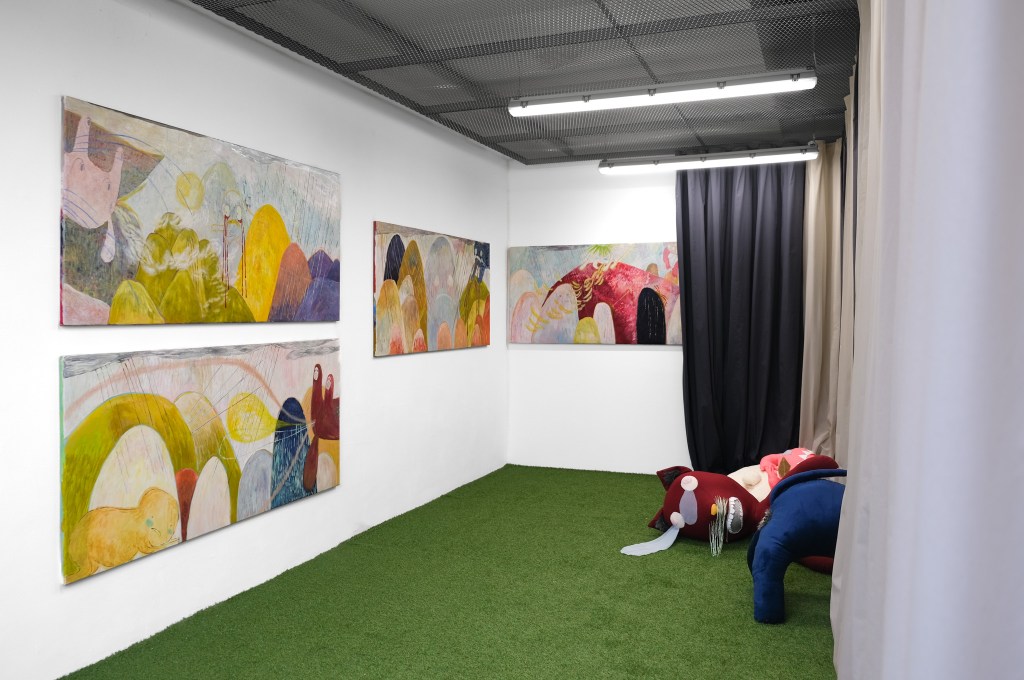
The artistic work of Juliana Nozomi deals with the psychological and social tensions that arise from the structures of today’s performance-oriented society. As a starting point, the question is posed of how permanent self-optimisation, constant availability and the excess of possibilities affects the inner experience of the subject. Exhaustion, stress, burnout and depression do not appear to be individual exceptions, but rather symptoms of a social order in which activity has become a norm, tranquility an exception and exhaustion a symptom.
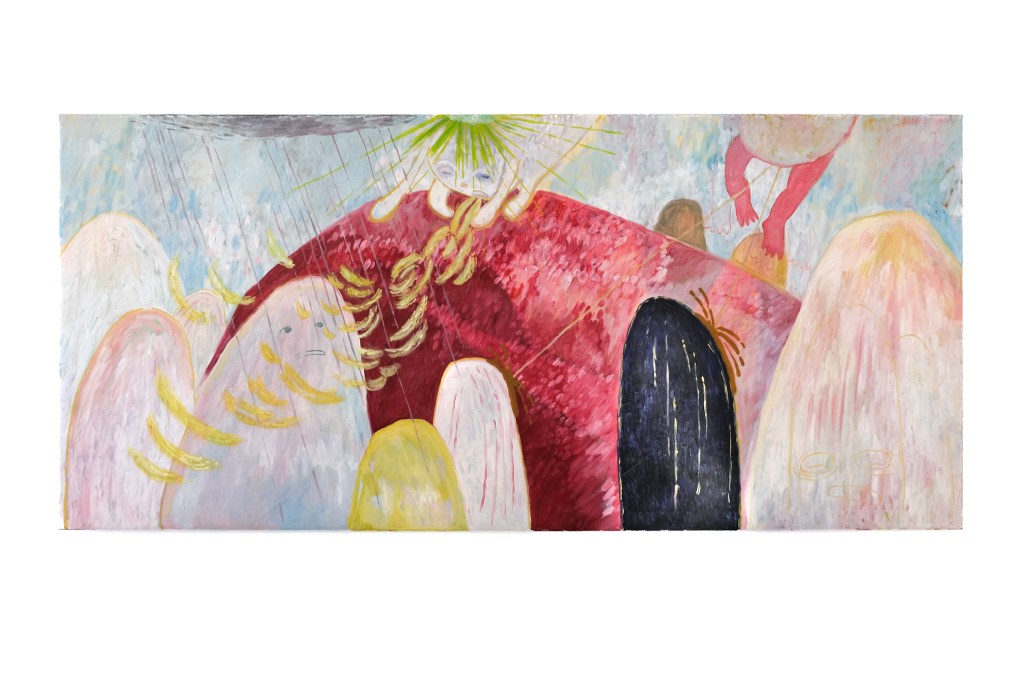
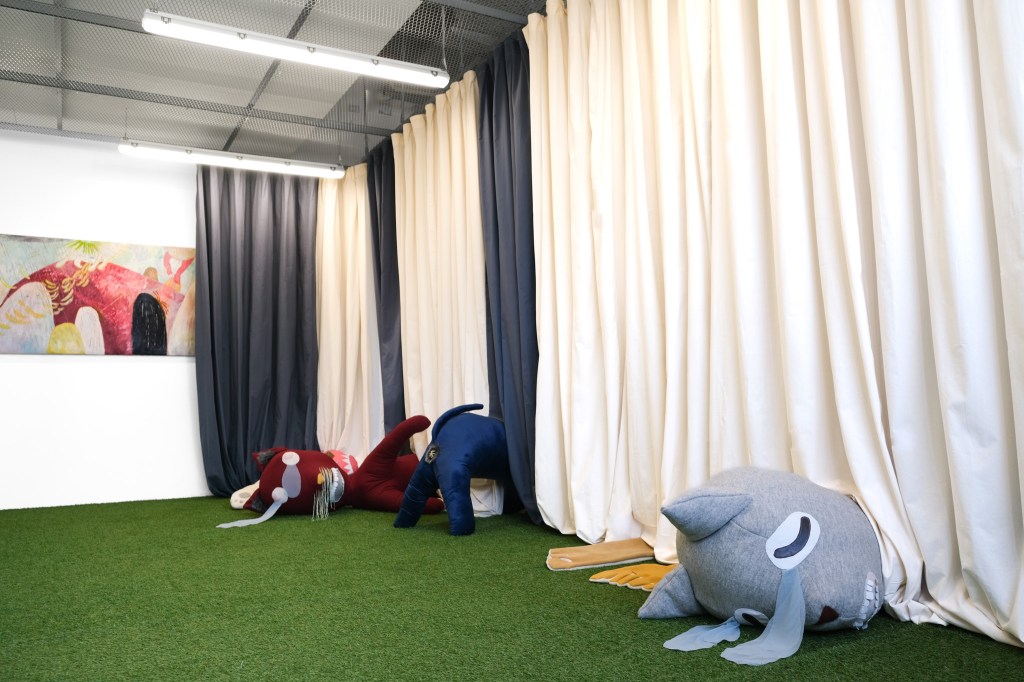
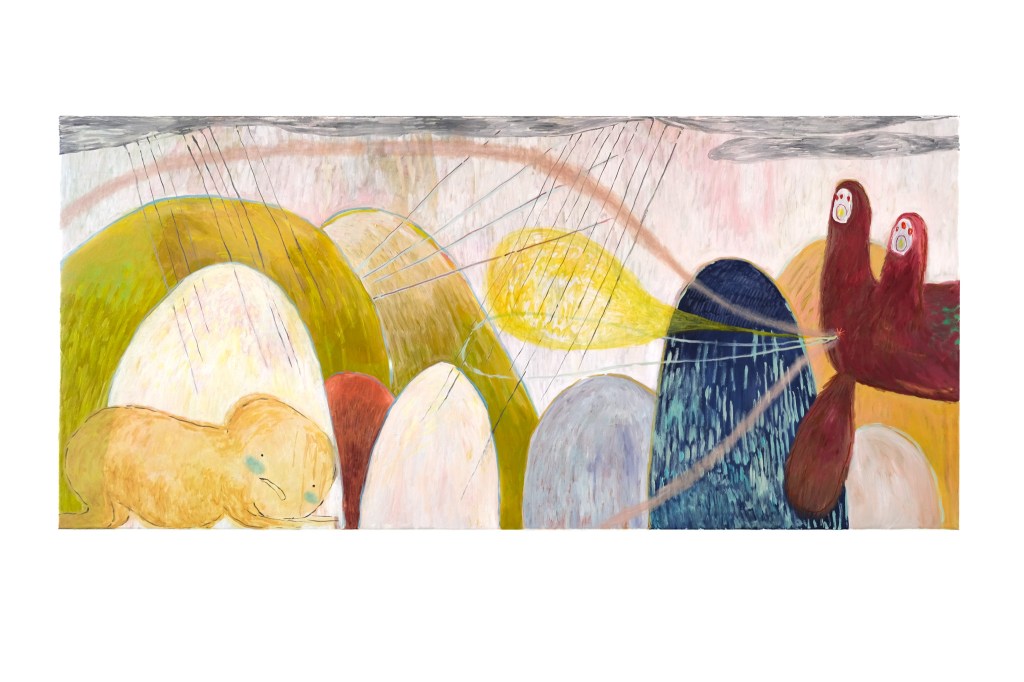
The spatial installation combines painting, soft sculptures and installation elements, creating some sort of artistic landscape of the mental state of a contemporary western society. Four paintings show hilly landscapes covered in a dull, whitish fog. The landscapes appear both idyllic and melancholic, as nature is traditionally associated with relaxation, recuperation and retreat, although the promise of this remains rather questionable in these images. It should be mentioned that these paintings were painted over older works, whereby the old images not carry the new ones in a both materialistic as well as symbolic sense. Painting is to be understood as a process, or rather as an idea and trace of a development, but not as a fulfilled and satisfying statement.
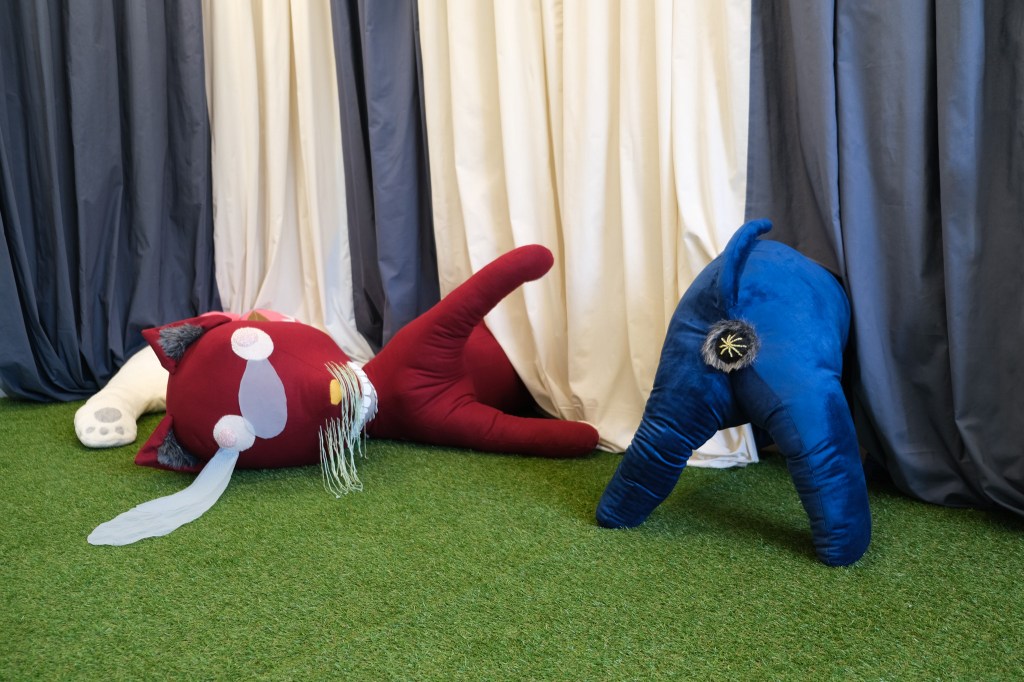
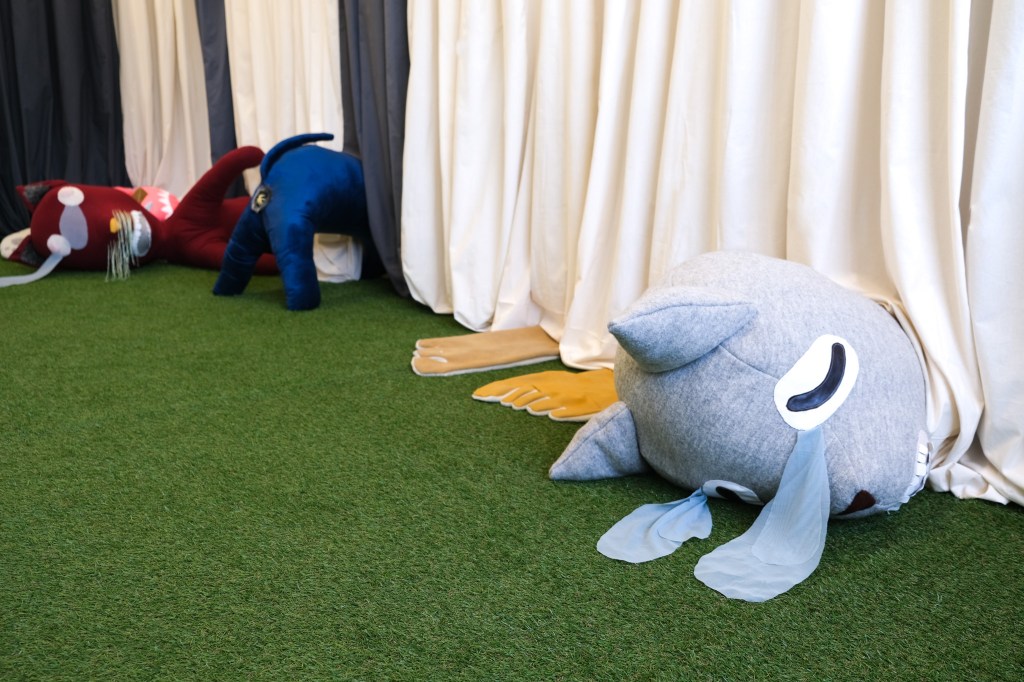
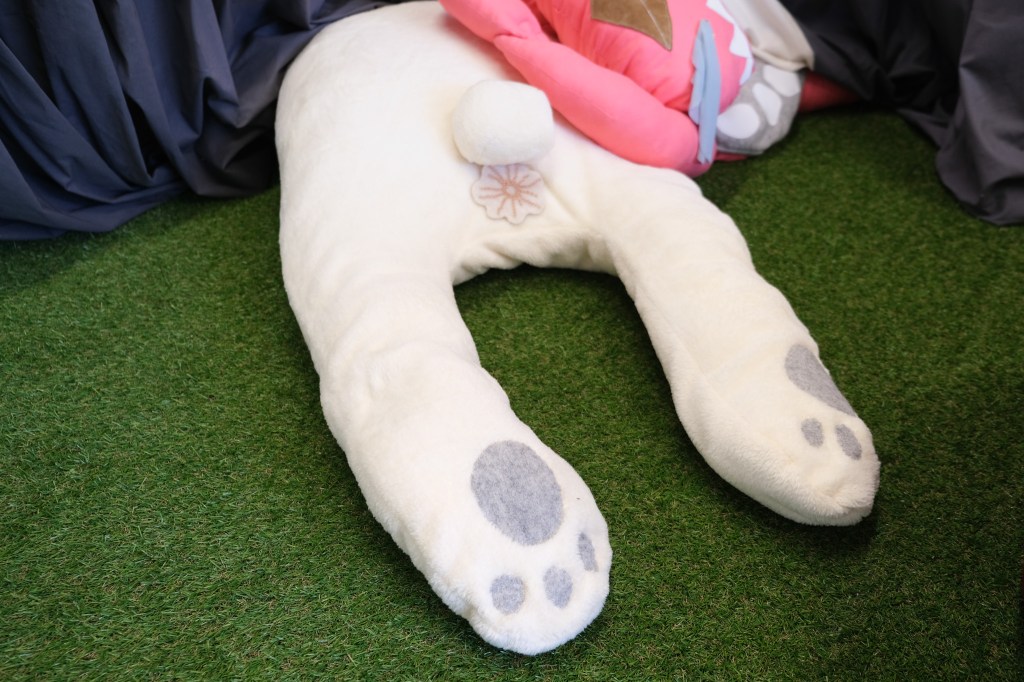
Small animal-like creatures appear at the edges of the paintings. Their fragmented bodies, gestures of paralysis, crying or falling refer to inner states of overload and exhaustion. The presence of the figures expand into the room. Along a floor-to-ceiling curtain lie soft sculptures resembling oversized stuffed animals. They seem to crawl, lie or glide under the curtain, with only the parts visible which have been cut off at the edge of the paintings. The soft sculpture figures reflect the inner psychological states of a subject in a contemporary high-functioning society. In a traditional sense, stuffed animals provide comfort and security, whereas in this case they themselves appear to be exhausted and demand care and affection from the viewer.
The floor of the room is additionally covered with artificial turf, which can be perceived as an artificial simulation of nature. This evokes a longing for peace and deceleration, but at the same time remains irritating and lifeless. Together with the curtain, this setting creates a threshold-like situation, as visitors find themselves in a conflict where it remains unclear whether they act as observers or have already become part of the scene. The clear separation between inside and outside, between distance and participation, is thus shaken.
Another element of the artistic work is humour. At first glance, the figures appear trivialised or absurd, but this humorous exaggeration does not serve to trivialize the subject matter. Instead, it opens up access to topics that seem difficult to grasp and often taboo. Humour functions as a means of distancing and identification at the same time, thus creating a state of limbo between tenderness and discomfort. It is with this ambivalence, that the artistic work seeks critical potential.
Juliana Nozomi’s installation does not claim to provide a medical explanation, as it does not operate in the field of diagnosis, but rather in that of visualisation. It attempts to make tangible how much psychological experience is shaped by social structures and inevitably directs the gaze towards the observing subject itself. Between compassion, irritation and self-perception, a space of productive uncertainty seems to emerge. A state in which simple answers are denied and it is precisely this that intends to have a lasting effect.
 JULIANA NOZOMI